

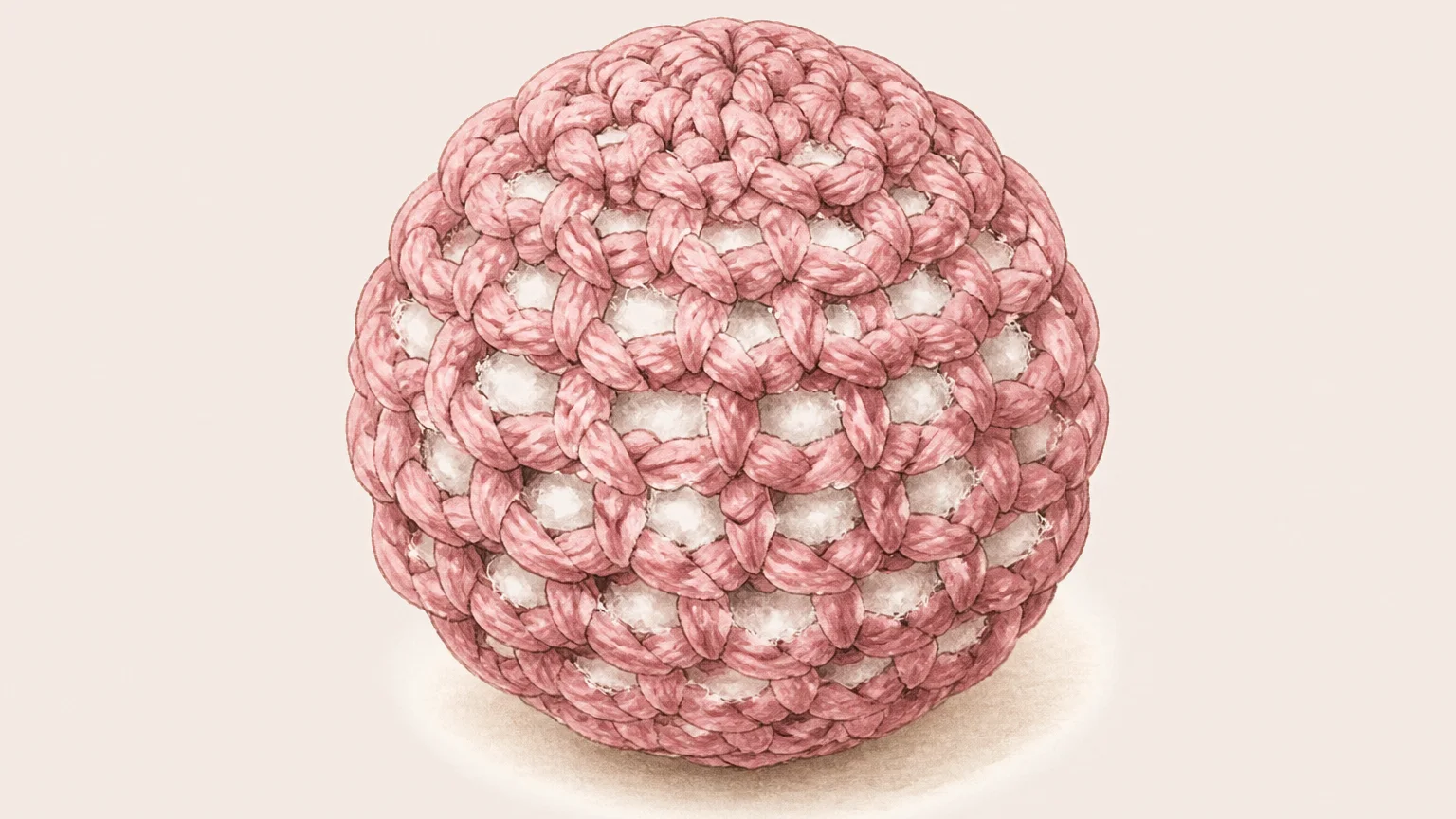
If the stuffing shows through your amigurumi, the problem is almost never your yarn. It is the size of your hook against that yarn, your tension, or where your increases land. Amigurumi is worked far tighter than any other crochet, and that is exactly what closes the gaps.
Why does amigurumi need such tight stitches?
Normal crochet is meant to drape. Amigurumi is meant to hold a shape around stuffing that is constantly pushing outward from the inside. If the fabric has any give, the stuffing wins and finds every hole.
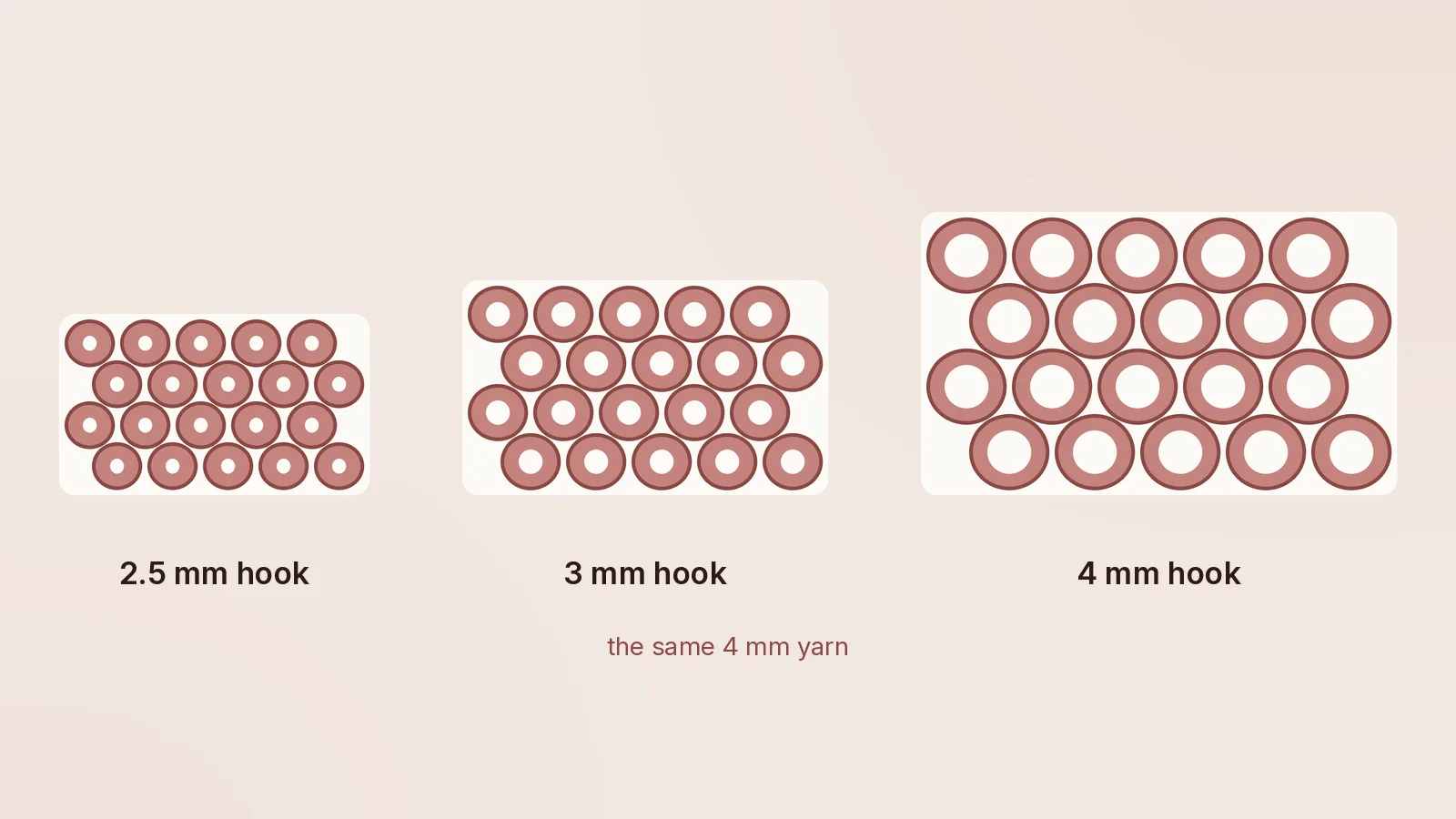
That is why almost every amigurumi pattern tells you to use a hook one to two sizes smaller than the yarn label suggests. A 4 mm yarn worked with a 2.5 or 3 mm hook makes a stiff, dense fabric that feels wrong in your hands and is exactly right for a toy.
What is causing my gaps?
| What you see | Most likely cause |
|---|---|
| Gaps evenly spread over the whole piece | Hook too big, or tension too loose |
| A hole at the very start of the piece | Magic ring not pulled tight, or a chain-2 start |
| Gaps lining up in visible diagonal lines | Increases stacked in the same place each round |
| A gap only where rounds meet | Working in joined rounds instead of a spiral |
| Gaps appearing only after stuffing | Overstuffing, or fabric slightly too loose |
How do I fix each one?
- Go down a hook size, then another. This is the fix for most gaps. If your fabric can be pulled apart with your fingers to show light, it is too loose for a toy.
- Start with a magic ring, not a chain. A chain-2 or chain-4 start leaves a permanent hole in the middle of the face. A magic ring pulls closed. Weave the tail in only after you have pulled it fully tight.
- Spread your increases. If a pattern says to increase six times a round and you always put them in the same six spots, you build straight ridges and the fabric strains along them. Stagger where the increase falls each round.
- Work in a continuous spiral. No joining, no chain to step up. This removes the seam entirely.
- Stuff firmly but do not overstuff. Add small pieces at a time and shape as you go. If the fabric is visibly stretched, take some back out.
Does the yarn matter?
Yes, but less than the hook. A smooth cotton or an acrylic with good stitch definition gives tight, even stitches and shows shape well. A fluffy or loosely spun yarn hides small gaps but also hides your stitches, which makes counting rounds much harder. For a first amigurumi, cotton is the easier teacher.
See how to count rounds in amigurumi and how to use stitch markers in crochet, since a spiral has no seam to count from.
Keep your rounds exact with Knittle
Amigurumi is unforgiving about counts. One missed increase in a round of 42 changes the shape of the whole piece, and in a spiral there is no seam to check yourself against. Use Knittle to count your rounds and stitches as you work, with a target for each round and custom counters for increase repeats, all kept on your device and synced across your iPhone, iPad and Apple Watch.


