

Curling crochet is your fabric pulling inwards, and where it curls tells you which cause you have. A bottom edge that cups usually means the foundation chain is too tight. A whole piece that draws in means tension or hook size. A circle that turns into a bowl means too few increases.
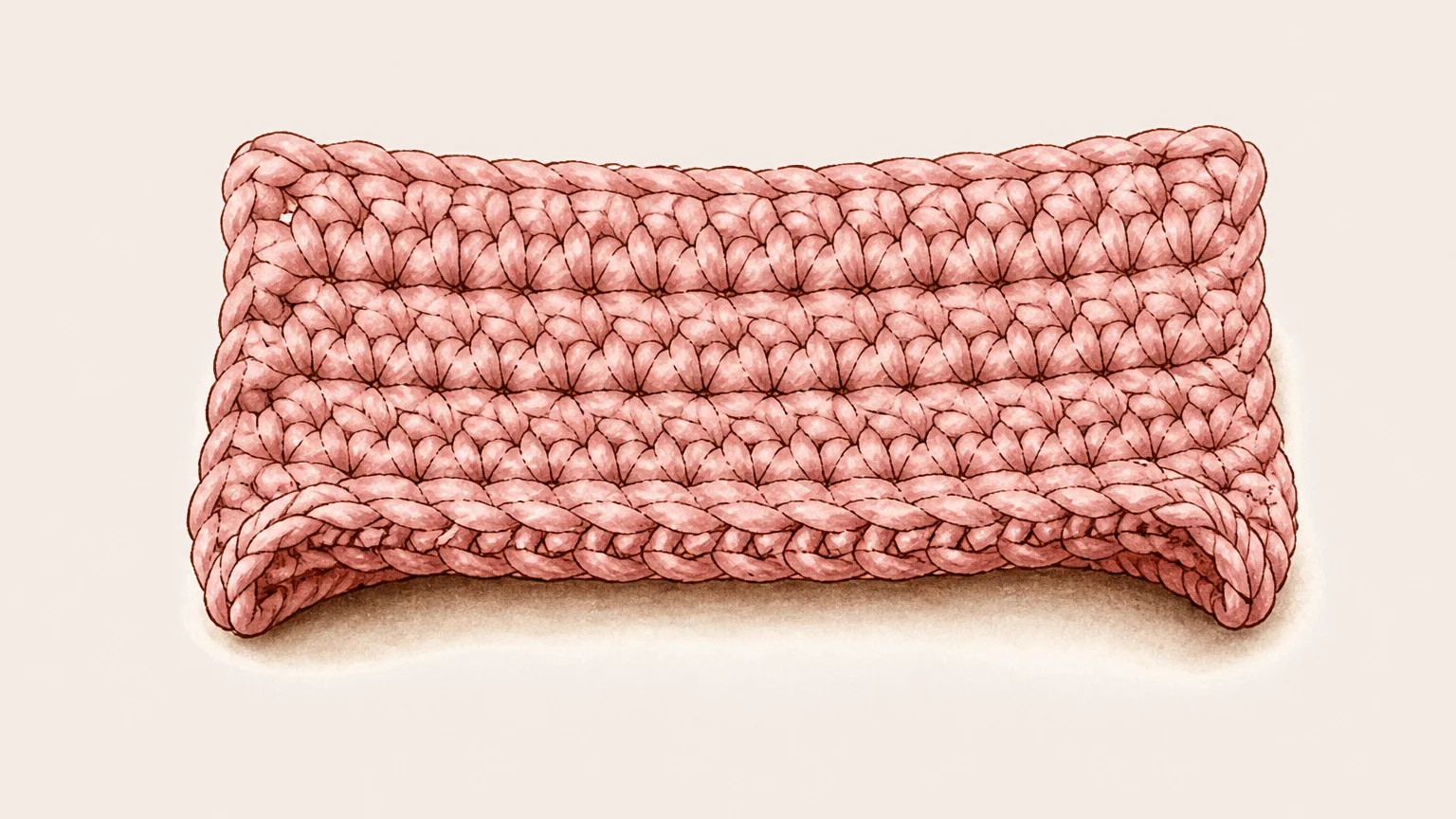
Where is your crochet curling?
Before changing anything, look at the piece flat and find which line below matches it. Each one has a different fix, and treating the wrong cause is how people end up frogging a project that only needed a bigger hook.
| What you see | The likely cause |
|---|---|
| Only the bottom edge cups up, the rest lies flat | The foundation chain is tighter than the rows above it |
| Only the top edge curves, the bottom is fine | The foundation chain is looser than the rows above it |
| The whole piece draws in and feels stiff | Tension too tight, or a hook too small for the yarn |
| A worked-in-the-round circle turns into a bowl | Too few increases per round |
| It lies flat until you wash it, then curls again | The fibre, usually acrylic, holding its old shape |
If instead your piece has too much fabric and ripples at the edges, that is the opposite problem: see why is my crochet wavy.
Is your foundation chain too tight?
This is the most common cause on a flat piece, and the easiest to miss because the chain looks fine on its own. Chains made at your normal tension end up narrower than the stitches worked into them, so the bottom edge pulls in while everything above lies flat.
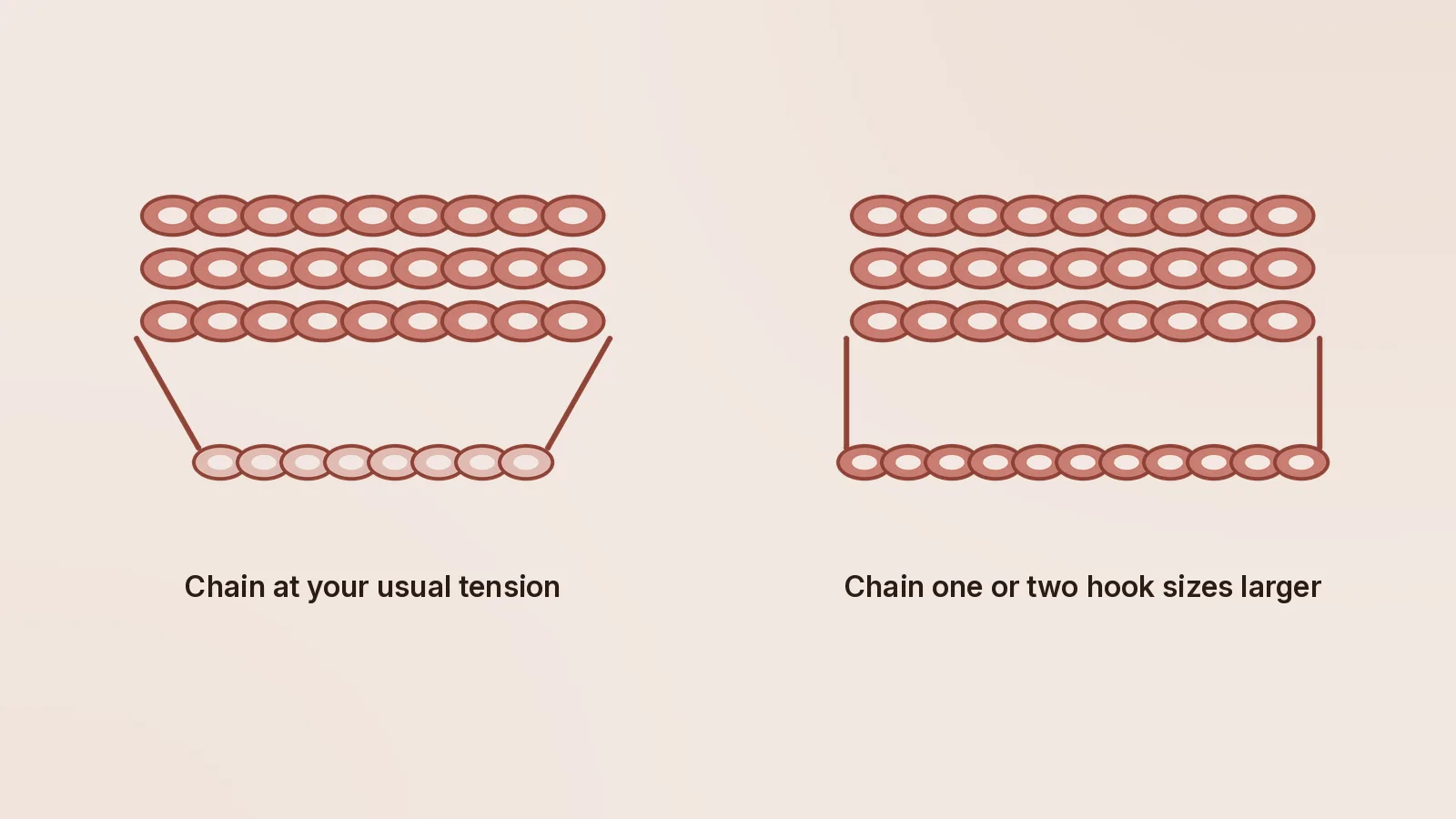
Two fixes, both used by the pattern writers:
- Work the foundation chain with a hook one or two sizes larger, then swap back to the pattern hook for row 1.
- Skip the chain entirely and use a foundation single crochet, which makes the chain and the first row in one pass, at the same tension as the rest.
The reverse is worth knowing too: a chain that is too loose leaves the top edge curving instead of the bottom.
Is it your hook or your tension?
If the whole piece draws in and the fabric feels stiff and boardy, you are working tighter than the yarn wants. Go up a hook size and crochet a small swatch. The fabric should have a little give when you tug it.
Do not try to fix this by pulling harder or relaxing "more carefully". Tension is a habit, and the hook is the lever you actually control.
Why does my circle turn into a bowl?
A flat circle needs a fixed number of increases every round, and that number depends on the stitch you are using, not on the pattern's mood:
| Stitch | Stitches in round 1 | Increases per round |
|---|---|---|
| Single crochet | 6 | 6 |
| Half double crochet | 8 | 8 |
| Double crochet | 12 | 12 |
Too few and the circle pulls in and cups. Too many and it ruffles. A frequent mistake is using the double crochet count with single crochet stitches, which ruffles by round three. If you are making amigurumi, the cupping is on purpose and you should keep it.
Will blocking fix it?
Blocking fixes curling caused by the fibre, and it hides curling caused by tension for a while. It does not fix a stitch count problem, which will come back the moment the piece is washed.
Wool and cotton block well with a wet block and pins. Acrylic barely holds a wet block at all and needs steam held above the fabric, never pressed onto it. If the curl comes back after every wash, the cause is the fibre, and a simple border row is a more reliable answer than blocking again.
Catch the cause early with Knittle
Most curling is decided in the first three rows, long before it looks wrong. Knittle is a row and stitch counter for crochet and knitting: keep the count for each round, set a target, and note the hook you used for the chain so the next project starts right. Your counts stay with you across your iPhone, iPad and Apple Watch.


