

Count the V shapes along the top of the row you just finished, one V per stitch, and do it before you turn. That single habit catches almost every crochet mistake while it still costs thirty seconds to fix. The rest of this page is what to count at the two ends, where beginners lose the thread.
What exactly are you counting?
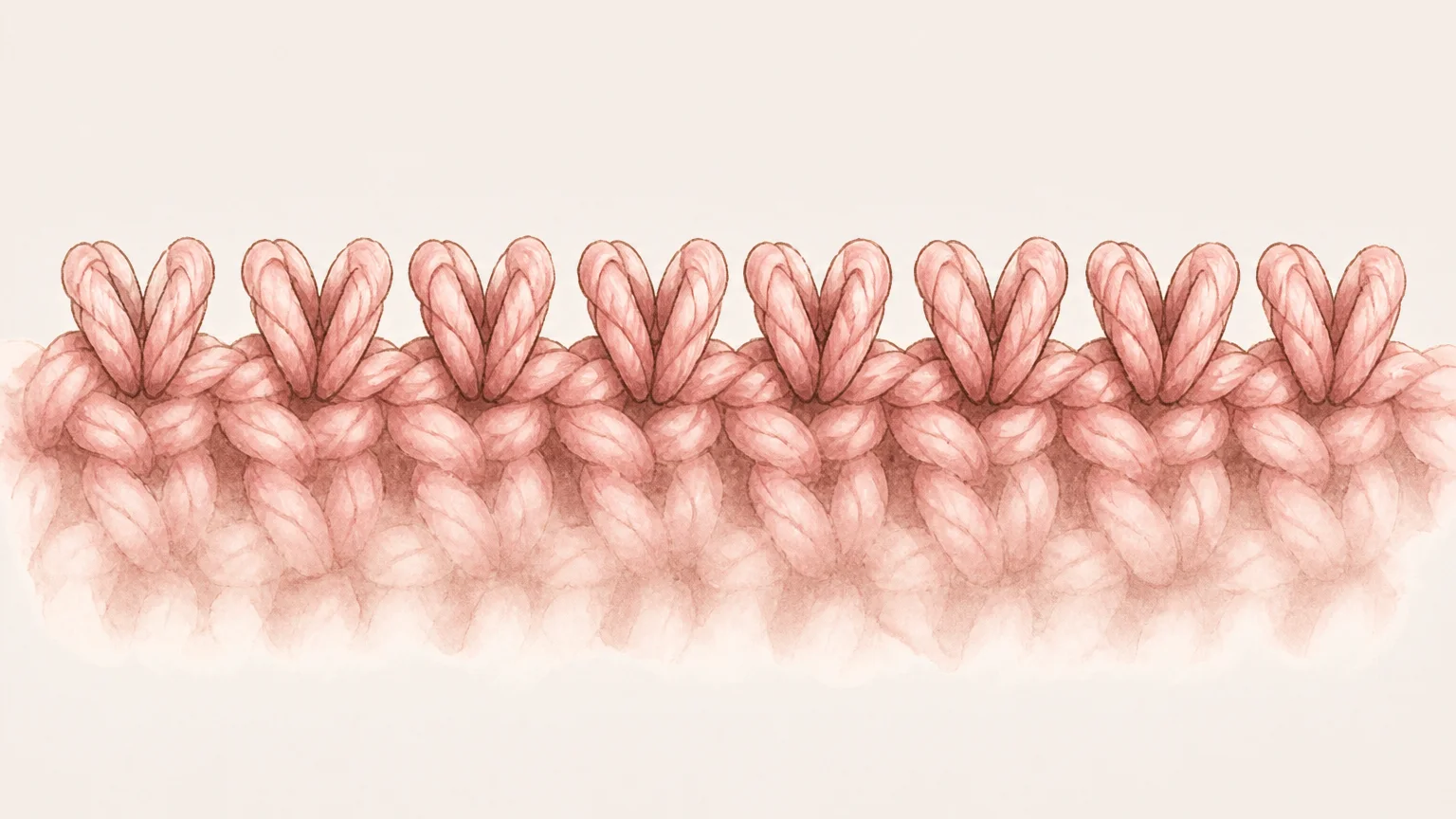
The top of every crochet stitch, whatever its height, ends in two loops that sit side by side and read as a small sideways V. Those Vs run along the top edge of your work in a neat line. One V is one stitch. It does not matter whether it was a single crochet or a treble: the top looks the same, which is the whole reason this method works on any pattern.
Lay the piece flat, right side up, and run your finger along that top edge as you count. Counting in your head while the fabric hangs from your hook is how numbers get skipped.
The V method or the post method?
There are two landmarks, and they are good for different moments:
| Method | What you count | Best for |
|---|---|---|
| The Vs on top | The two loops at the top of each stitch | The row you have just finished, any stitch height |
| The posts | The upright body of each stitch | Tall stitches, and counting a row you finished a while ago |
On single crochet the posts are short and crowded, so the Vs win. On double and treble crochet the posts are tall and clearly separated, and many people find them easier to count than the Vs above them. Use whichever is clearer on the yarn in your hands, and stay with it for the whole project.
The two ends are where the count goes wrong
Almost nobody miscounts in the middle of a row. The errors live at the edges, and there are only two of them:
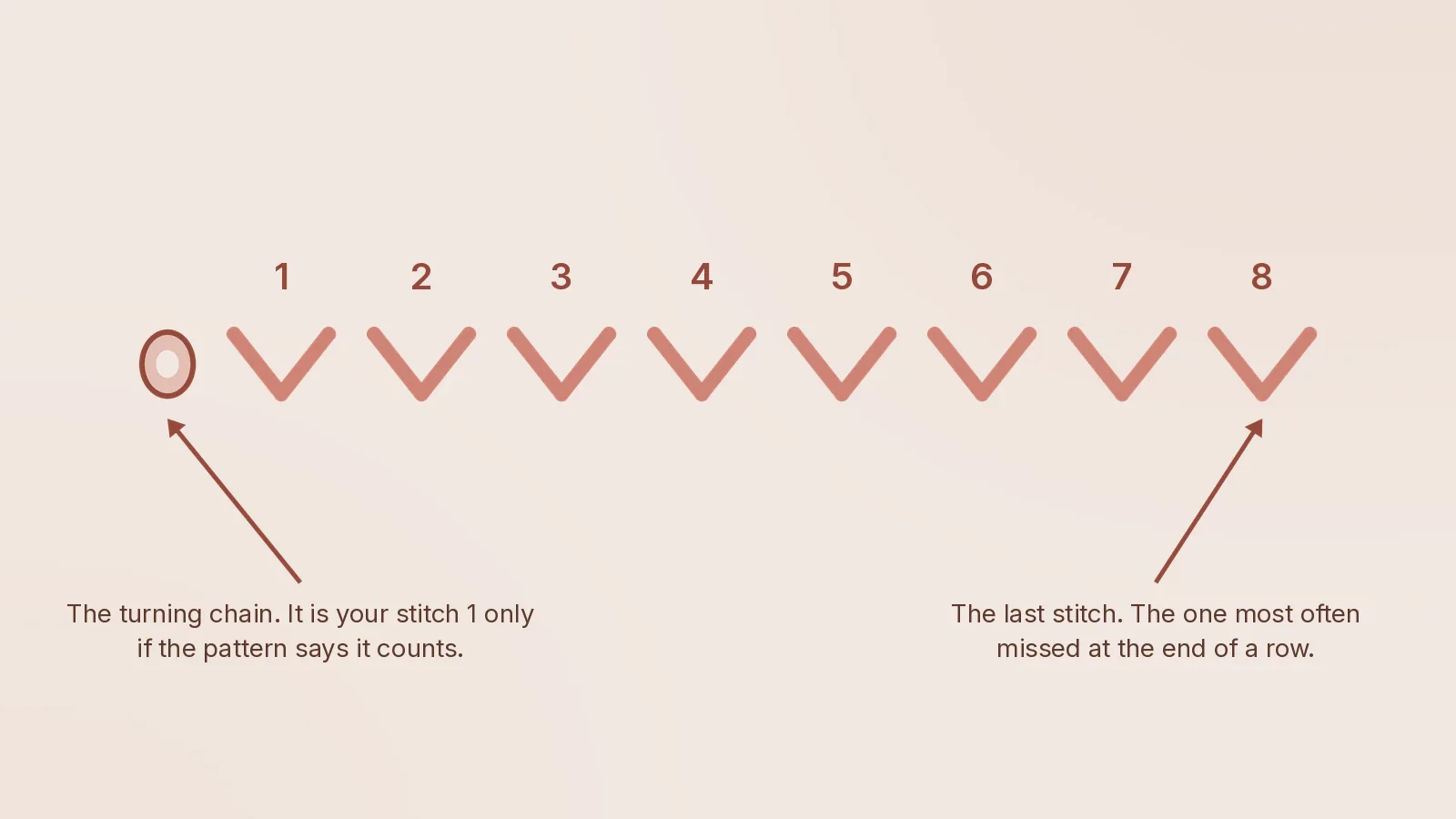
- The start. If the turning chain counts as a stitch, it is your first V and you must include it. If it does not count, it is not a stitch and you must not. This one decision is the single biggest source of drifting counts: see does the turning chain count as a stitch.
- The end. The last stitch of the row sits in the top of the previous row's turning chain, or in the last real stitch, depending on the same decision. Miss it and you lose a stitch every row; work an extra one and you gain one.
If your total is one out, every row, in the same direction, the cause is at one of those two ends and nowhere else.
When should I count?
At the end of every row, before you turn. Not "regularly", not "when it looks wrong": every row. A wrong count caught immediately is one row to undo. Caught ten rows later it is an evening.
On a wide piece, put a stitch marker every twenty or twenty-five stitches as you work the first row. Then you never recount the whole row: you count the section that disagrees. On a blanket that turns a recount from three minutes into ten seconds.
Working in the round has no top edge to read across, so the method changes completely: see how to count rounds in amigurumi and lost count in the round.
What if the count is already wrong?
Compare against the pattern first, then decide. One stitch out on a swatch is worth undoing. One stitch out on row 40 of a blanket, in a stitch pattern that hides it, is often worth fixing on the next row with an increase or decrease instead. Both are legitimate, and knowing which you chose matters more than which one it was.
Keep the count without recounting, with Knittle
Counting the Vs tells you where you are once. A counter tells you every time you pick the work up. Knittle is a row and stitch counter for crochet and knitting: tap once per row, keep a separate counter for a repeat, set a target and watch the progress ring fill. The counts stay with you across your iPhone, iPad and Apple Watch, so putting the work down costs you nothing.


